An anti-factory? Dutch Ternate and its role in preventing trade and production of a global commodity

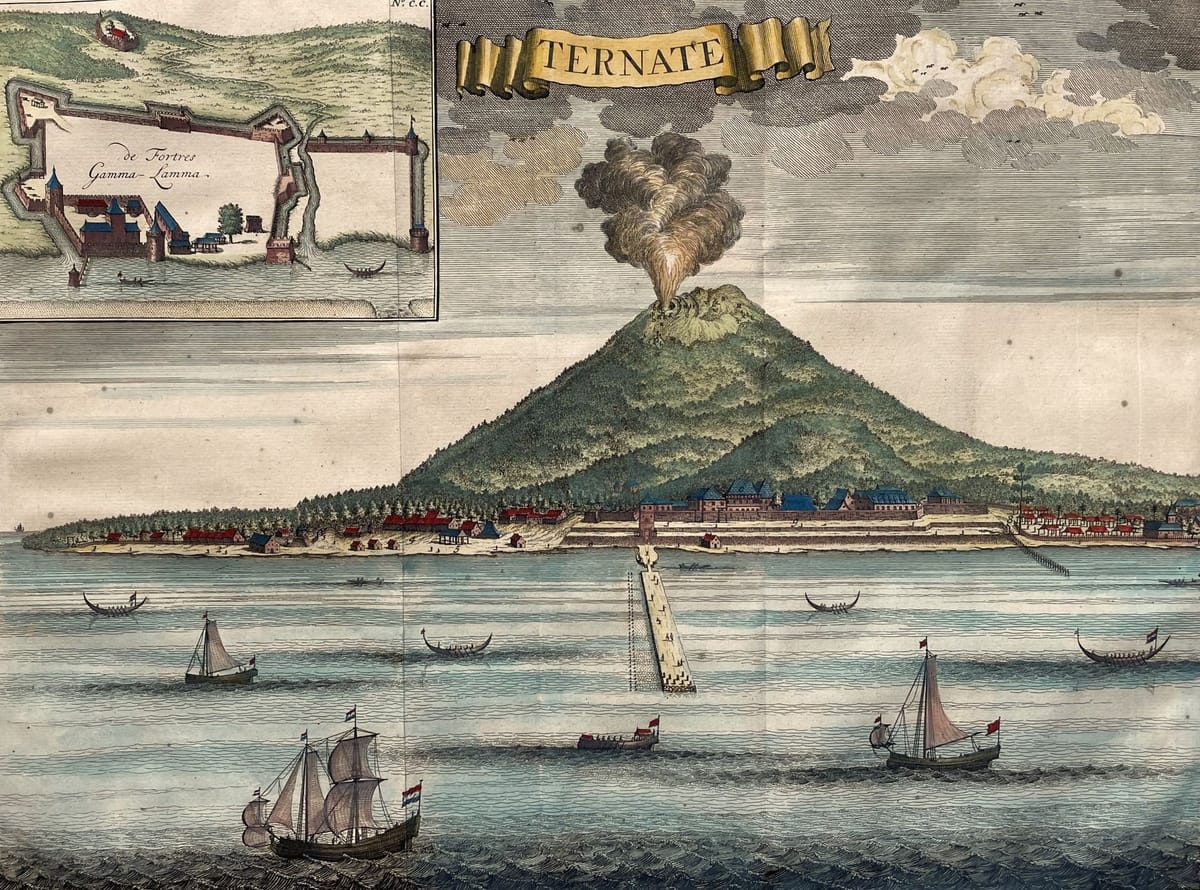
In his encyclopedic Oost en Nieuw Oost Indien (1724–26), the Reverend François Valentijn prided himself on providing the first extensive description of Maluku. He began with Ternate, a small volcanic island and the seat of the most powerful Sultanate in the region. Historically, Ternate was a global hub, drawing traders from across the Indian Ocean and the China Seas in search of the cloves that were unique to Maluku.
Yet, Valentijn’s description of trade in Ternate is surprisingly brief and quaint. He notes that necessities are brought in from Ambon and that, in return, the island occasionally supplies ‘edible bird’s nest, rice, and tortoise shell.’ Cloves, the claim to fame of North Maluku and the very reason for the European presence, are conspicuously absent.
How is this possible? The answer prompts us to reconsider the various functions a factory could serve and the supreme importance of diplomatic, political, and military power in the formation of early modern trade networks, colonial or otherwise.
A mixed blessing: spices and power in Maluku
It was the clove trade which had originally drawn the Dutch East India Company (Verenigde Oost-Indische Compagnie or VOC) to North Maluku. Clove and nutmeg were unique to the region, and had long attracted traders from far and wide – including European ones. Around the turn of the 17th century, the region was the object of a scramble for access to these commodities. After the Spanish seized the Ternaten capital in 1606, capturing the Sultan and sending much of the Ternaten nobility fleeing and casting around for allies, the VOC saw a great opportunity to intervene.
In 1607, VOC Admiral Cornelis Matelief de Jonge concluded a treaty with the newly appointed Sultan, Muzaffar. The Sultan recognized the Dutch state as his ‘protector’ in exchange for giving the VOC exclusive rights to cloves. Crucially, the Sultan of Ternate was formally the ruler of big swaths of Maluku, including clove-producing areas as far south as western Seram, in the Ambon region.
The VOC had concluded similar treaties, offering protection in exchange for exclusive rights to buy spices elsewhere in the region, for instance, in the Banda Islands and on Ambon. VOC officials felt that the treaty with Ternate brought control of the clove trade within reach. Meanwhile, as English competition intensified, the Company realized that a European monopoly was impossible without total control over the supply. Consequently, the ambition to become the sole supplier of cloves and nutmeg became ever more urgent in the eyes of Company officials.
Control and resistance
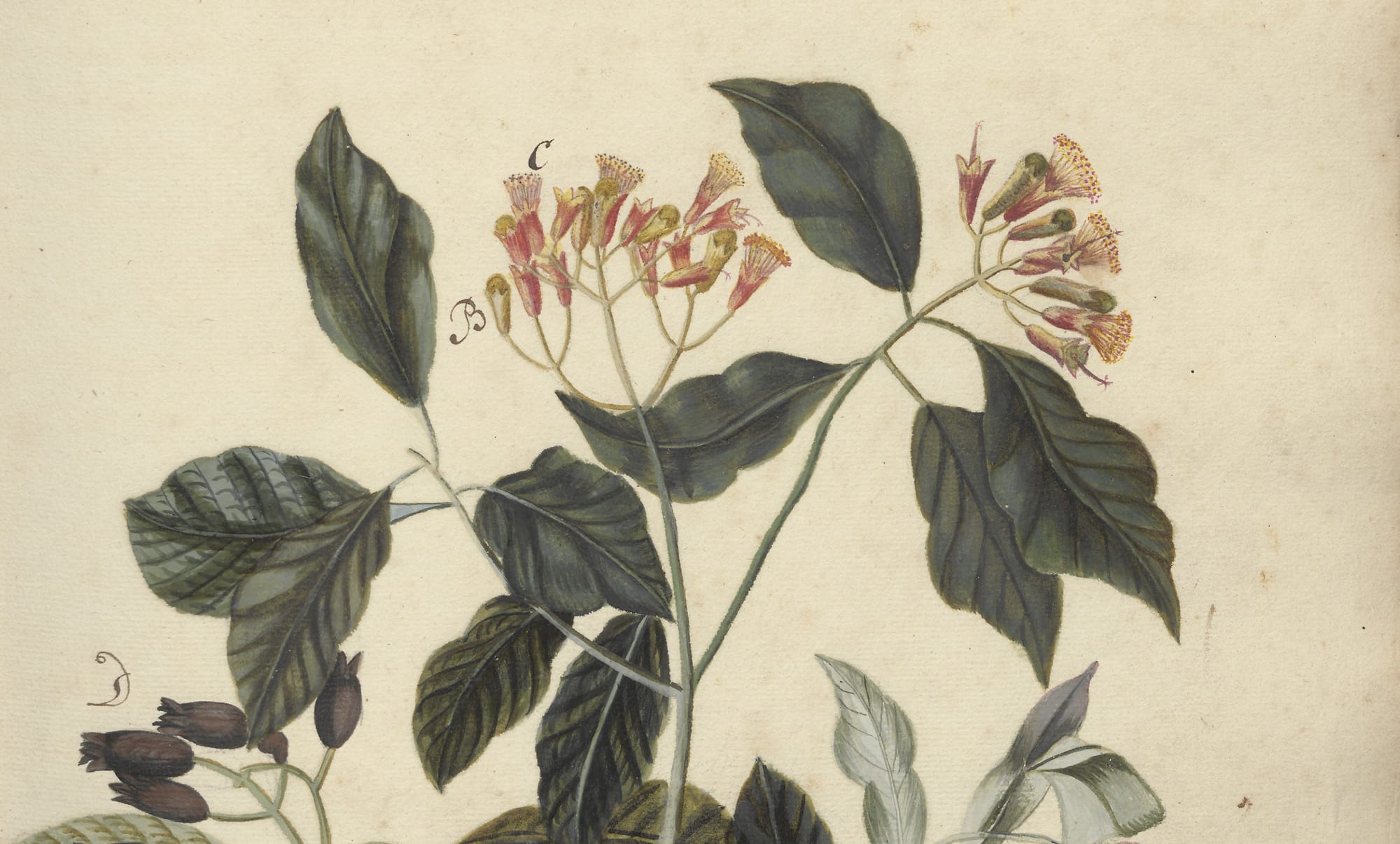
The VOC’s efforts towards complete commercial control soon bred resentment. Cloves were the prime source of income for the region, had been crucial in its state formation processes, and brought in goods, people, and ideas from the wider Indian Ocean world. Late 16th-century European observers, including Francis Drake, noted the cosmopolitan court culture this fostered, with Rumi, Ottomans, Italians, Chinese, and renegade Iberians present there. The Dutch efforts toward control of the trade threatened to isolate the region, rendering it entirely dependent on the VOC.
The periphery rebelled first. In western Seram, local leaders ruled indirectly by Ternate found they had everything to lose from the arrangements made by their distant Sultan, while not really profiting from the alliance with the VOC. Resentment turned into open hostility after the 1621 genocide in the Banda Islands, which was the result of a very similar conflict: as nutmeg had been the main export in the Banda islands, the Dutch efforts to monopolize it through treaties there had also worked to make the islands completely economically and politically dependent – resulting in a bitter war and, ultimately, genocide of the population of the Banda Islands. The VOC’s clear willingness to use violence, existing ties between the Bandanese and other communities in the region, and the wave of refugees washing across the area, compelled the inhabitants of Seram to armed resistance. VOC employees were attacked, the Company had to retreat from several of its outposts in the region, and the region’s communities were even less inclined than before to sell their cloves to the Dutch at the fixed, low prices. They instead opted to sell them to traders from large entrepot towns further west. The leaders of Makassar, in particular, rose to the occasion, sending ever larger fleets of traders while also offering military and political protection to the communities of the peninsula.
In 1625, the Company struck back using the military power of the Nassau Fleet. Originally a joint venture by the VOC and the Dutch state to attack the Spanish around the Pacific, this war fleet ultimately made its way to Ambon. There, the local VOC governor used this windfall military power to mount a massive punitive expedition, burning villages around the peninsula and ringbarking an estimated 65.000 clove trees.
Overproduction and extirpation
The expedition of 1625 not only definitively escalated the conflict, but also marked a shift in strategy: if the VOC could not control the trade, it would eradicate the trees. Noting the difficulties of controlling clove production in the region at large, the VOC had by this time embarked on schemes to have trees planted in the areas it directly controlled. It could therefore afford to destroy trees outside its own area of direct control. What’s more, as the 17th century wore on and the VOC’s efforts toward total control became more successful, VOC officials grew increasingly concerned about overproduction. From the early 1630s onwards, we find successive VOC officials worried that production would outstrip ‘what the entire world can consume’, and that soon, ‘we will have to burn our own cloves.’
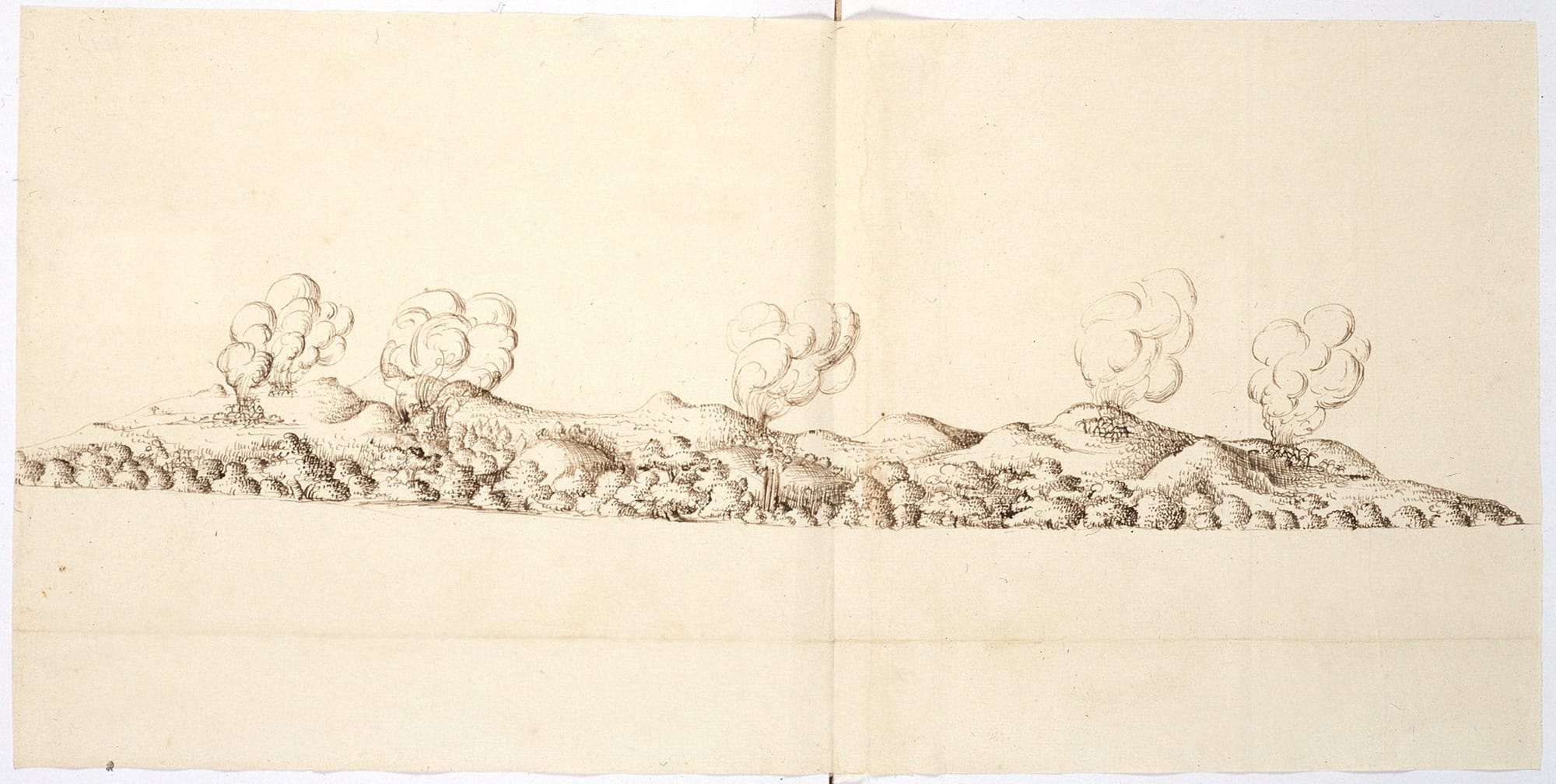
The reality of this problem became increasingly apparent in the course of the 1640s, when the VOC was increasingly successful in crushing opposition to its monopoly regime and maintaining control of the spice production and trade. Now that the VOC was actually in a position – and obliged – to buy up almost the entire world production, it became clear how much was being produced. Buying it all was sometimes problematic, and fears of saturating the world market prompted some VOC officials to muse on further production limit schemes. However, they saw no way to implement these measures without breaking their own treaties and causing renewed resentment among the population of the region.
The years 1650 and 1651, however, saw two major connected rebellions in Ternate and the Ambon region. First, the Ternaten aristocracy deposed Sultan Mandarsyah, who had been installed two years previously under Dutch pressure, and was considered far too accommodating to Dutch interests. Then, just as the VOC had sent a fleet to have him reinstated, Kimelaha Majira, the Ternaten representative in western Seram, staged a massive surprise attack in the Ambon region and was able to capture virtually all of the Dutch outposts on western Seram and the adjacent islands. The garrisons and other Europeans were killed wholesale. Overnight, the VOC lost control over the region outside of Ambon Island proper.
Arnold de Vlaming van Oudshoorn, himself a former governor of Ambon, was first sent to Ternate to reinstate the Sultan, and as a consequence, was also on the spot to respond to the surprise attack in western Seram. His take on the revolt might now strike us as peculiar: rather than a crisis, he saw an opportunity. ‘In our opinion, the Company can also reap benefits from this revolt that are valuable beyond estimation’, he advised the governor-general and council, as it could now ‘do what could otherwise never have been legally done’: eradicating clove trees outside VOC control.
‘Now come to an end’: complete eradication and the stipend system
The ensuing war was an exercise in environmental destruction and genocidal reshaping of the political landscape. In western Seram, the VOC depopulated entire regions, declaring them an ‘eternal wasteland.’ In North Maluku, De Vlaming, justifying himself by the provisions of the most recent treaty with the sultan of Ternate, offered the local rulers a choice: destroy your own cloves and receive a yearly stipend, or watch the VOC destroy them and receive nothing.
In turn, the local rulers felt compelled to choose the former in the course of the conflict. This effectively made them dependent on the VOC. As De Vlaming candidly noted, the people of the island of Makian, for instance, once a ‘proud and brave nation’ empowered by their spices, could now be ruled at Dutch discretion. Their only means of support was a Dutch stipend that could be revoked at the ‘slightest reluctance.’ Ironically, tradition had it that the clove was originally from the island of Makian, where it was now eradicated. What De Vlaming wrote about Makian applied to North Maluku as a whole. From then on, cloves were only allowed to be cultivated on Ambon and the small adjacent islands that the VOC directly controlled.
An anti-factory?
Ternate kept its accounting in the same way as other VOC posts, and obviously became hugely loss-inducing under this system. By the early 18th century, the stipends for the rulers, the extensive forts and garrisons, and the expeditions that the VOC mounted to find and eradicate clove and nutmeg in a perennial cat and mouse game with the inhabitants of North Maluku, cost the VOC roughly 200,000 guilders a year, with almost no trade income to show for it.
Yet, within the logic of the wider operation of the VOC, this made sense. The function of the Ternate factory was strategic, ensuring that the production centers of clove and nutmeg further south, in Ambon and Banda, maintained their position as exclusive producers. This case study reminds us that the origins of global capitalism were not just found in the creation of markets, but in their violent, systematic destruction. One late-19th-century Dutch description of Ternate remarks: ‘What makes Ternate retain the particular character of the past is that the trade circuits of the great nations never extended to these places.’ This characterization of Ternate as a sleepy, charming colonial town still living in the past, however, overlooks a rather crucial detail: it had in fact been part of these trade circuits, but the Dutch had pushed the region out of it in a sustained effort to corner the world market of a global commodity.
As Sebastian Conrad has argued, global history often risks fetishizing interconnectedness, celebrating the flows of goods and ideas while obscuring the power dynamics that dictate these flows. Ternate provides us with a compelling case study illustrating such power dynamics. It reveals that the integration of the Indian Ocean into a global capitalist system was not just about new markets and new institutions, but also about the destruction of existing ones. In the ledger of the VOC, the 200,000 guilders spent annually on Ternate were not a failed trading venture, but a necessary investment in excluding this region from these global flows of goods, capital and people.
Annotated bibliography
This blog, particularly the part describing events up to 1656, substantially relies on my dissertation, ‘Spice War: Ternate, Makassar, de Dutch East India Company and the struggle for the Ambon Islands, c. 1600-1656’.
Valentijn’s encyclopedic work is: François Valentyn. Oud en nieuw Oost-Indiën, vervattende een naaukeurige en uitvoerige verhandelinge van Nederlands mogentheyd in die gewesten etc. Dordrecht: Joannes van Braam, 1724-1626. 5 vols.
The period 1650-1770 in Maluku, particularly the sultanates in the north has been quite under-researched: one exception is Andaya, The world of Maluku: Eastern Indonesia in the early modern period. University of Hawaii Press, 1993. Some attention is given to the practice of the spice monopoly in Els Jacobs, Merchant in Asia: the trade of the Dutch East India Company during the eighteenth century. Leiden: CNWS publications, 2006, on which I have relied for some of the accounting numbers mentioned here. For the Ambon area under VOC control in the 17th century, Gerrit Knaap, Kruidnagelen en Christenen: De Verenigde Oostindische Compagnie en de bevolking van Ambon, 1656-1696. Brill 2004, remains the standard work.
The late-19th-century description of Ternate is from: F.S.A. de Clercq, Bijdragen tot de kennis der residentie Ternate. Leiden: Brill, 1890, p. 1.
Sebastian Conrad’s remarks on connectedness vs. (unequal) power in: Sebastian Conrad, What is global history? Princeton University Press, 2016, p. 52 and 187.
The view of Ternate originates from: https://www.datnarrenschip.nl/products/indonesie-ternate-aanzicht-vulkaan-gamalama-f-valentijn-1724
The map of Maluku originates from: https://static-prod.lib.princeton.edu/visual_materials/maps/websites/pacific/spice-islands/spice-islands-maps.html